

Staying close to customers is easy to claim. Here are the receipts.
The small business owners who hand us their payroll, the bookkeepers running it for 20 clients at once, the employees who just want their pay stub to make sense — they’re the reason we exist. That’s why customer centricity isn’t just a value hanging on a wall here. It’s how we make decisions, prioritize the roadmap, and respond when things don’t go as planned.
“Behind every payroll run, there’s a real business, real people, who need to be paid correctly and on time.”
— Alex Gonçalves, Chief Commercial Officer, Wagepoint

We listen before we build
When Ben Richmond joined as CEO in 2025, one of the first things he did was email small business customers and accounting and bookkeeping partners with a single question:
What’s not working?
He read every reply and answered more than 200 emails, one at a time. Especially the ones from frustrated customers. Because understanding what’s broken is just as important as celebrating what’s working.
As Ben puts it, “having empathy for what our customers go through is critical. This business was founded on being really close to the people who trust us with their payroll, and to do right by them, we need to understand their reality as well as they do.”
That philosophy extends well beyond our leadership team.
We regularly host customer dinners and partner events across Canada, because real conversations tell us more than a dashboard can. Our WagePAC advisory council gives accounting and bookkeeping partners an ongoing voice in product decisions. We’re building a dedicated Small Business Council so that business owners have that same direct line into what we build next.

However feedback reaches us, it reaches everyone: support, product, and leadership. Across all of it, what you told us was consistent:
- Keep the simplicity that makes Wagepoint stand out
- Help us grow without pushing us into bloated enterprise software
- Leave room for the weeks, or pay periods, that don’t go to plan
- Fit around the tools we already use instead of replacing them
- Do the fundamentals better than anyone else, instead of chasing buzzy features
“Customer centricity is super easy when the feedback’s positive. The real test is whether a company is prepared to listen when the feedback’s uncomfortable, and actually invest in that problem and change how that is operational within the business itself.”
— Alex Gonçalves, Chief Commercial Officer, Wagepoint
But listening is only valuable if it changes what happens next. Here are four ways your feedback helped build today’s Wagepoint.
1. You said fundamentals before flash
Wagepoint has been around since 2012, and we’ve never chased every segment or feature just because a competitor did. We’re deeply focused on Canadian payroll: the day-to-day realities facing Canadian small businesses, accountants, and bookkeepers. Payroll is highly local, highly regulated, and deeply personal, which is exactly why specialization matters more here than in most software categories.
It’s also why we’ve kept the human side of payroll front and centre while much of the industry leans harder into automation. We’re championing AI, both to run our business better and to improve what you experience in the product, but always in service of the people doing the work, never instead of them. That’s innovation that matters: whether it’s the AI Payroll Summary or other future updates, our goal is helping to run payroll with greater confidence while keeping people at the center.
That focus decides what we build. This past year, that looked like:
- Foundational reliability first. You were clear that the core has to be right, so that’s where our time went, including a dependable year-end.
- Then what’s next. Full end-to-end payroll on mobile, and careful, human-supervised uses of AI, starting with AI Payroll Summary.
- Quality-of-life fixes throughout. The small things that quietly save real time, like faster CSV imports and deeper reporting.
2. You said keep it simple
Simplicity is easy to promise and hard to keep. Every feature request, every competitor release, every enterprise checkbox is a small argument for making Wagepoint more complicated.
So some of the most useful feedback you’ve given us is about what not to build. When partners told us they didn’t want their highly customized payroll codes automatically migrated from their legacy platform, we changed our migration plan to provide a clean start — because the people doing the work told us that’s what would actually help.
Growing shouldn’t mean graduating into software that needs a specialist to operate. That’s the line we’re holding, and you’re the reason we know where it is.
Nearly a third of our customers are now running on the modern platform, giving us an NPS roughly 10 points higher than before. That’s the kind of thing that only comes from actually listening, and then doing something about it.
3. You already had tools that worked, so we connected them
Payroll doesn’t happen in a vacuum. It happens between a customer call and a late invoice, on a phone with three tabs open, ten minutes before daycare pickup. And unlike many other business tasks, payroll has real consequences if it doesn’t happen on time.
You already run scheduling tools, time-tracking apps, and accounting platforms that work for you. Nobody should have to tear that out to keep running payroll. So we strengthened the connections that matter — new integrations with 7shifts and Deputy for scheduling, and a stronger link to Xero for accounting — so the tools you already trust keep working alongside Wagepoint.
We’d rather understand how your business already runs and build around it than ask you to change what’s already working.
4. You needed a buffer for the weeks that don’t go to plan
Any software company can build what’s easiest for its own team to support. The harder question is whether you build for the edge case, the week that doesn’t go to plan.
One we debated internally: turning off autopay for a single run while still handling the tax calculations. It’s one of those edge cases. It’s also one that comes up more often than you’d think.
“The fact that a small business owner might be a parent, and the school called for an early pickup because the little one’s sick, and they miss running payroll and now they’ve missed cut off. … They could just turn off the autopay, still get the amounts and pay their people via wire, get them paid, and then we would still take all the beautiful source deductions out.”
— Ben Richmond, CEO, Wagepoint
We built it. Because that flexibility matters to an owner in the middle of a scramble.
Staying close as we grow
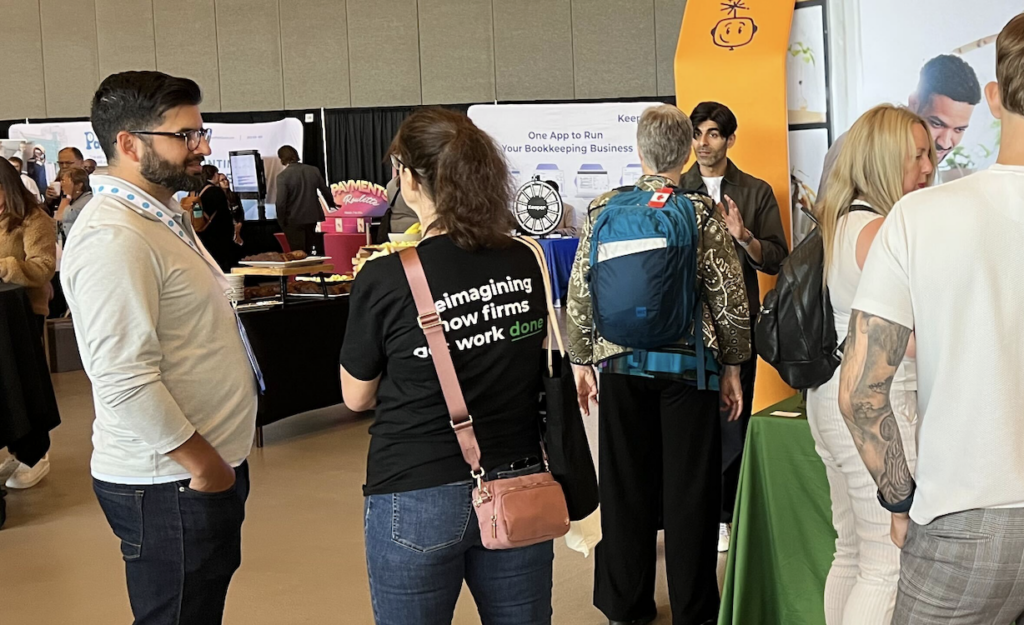
As companies scale, leaders drift from what customers actually experience. Layers and metrics pile up, and it’s easy to let sales run ahead of what the business can deliver. “The greatest risk as a company scales is distance,” Alex says.
So staying close to you as we grow is our main priority:
- Customer success has doubled in size this year. Human support matters to new and long-standing customers alike, so we’ve invested to keep it ready whenever it’s needed.
- We’re there for the whole journey. From the first conversation through to onboarding, enablement, and everyday help, we’re there to make the journey a smooth one.
- We’d rather overdeliver than oversell. A promise from us is one we mean to keep, so we’d sooner grow a little slower than make one we can’t.
- We’re building for people and time, not just pay. Timesheets and the My Wagepoint mobile app are the first pieces of that, bringing payroll, time tracking, and the people side of your business into one place. More of that is coming.
Small business owners tend to interact with us less like a vendor and more like a person handling their money. We value that relationship. It’s a perspective everyone at Wagepoint operates from, and it’s a big part of why customers stick with us for years.

The same instinct kicks in when something misfires. As careful as everyone is, yours and ours, payroll occasionally goes sideways. When it does, we’re already watching.
“When we had customers who thought they’d run payroll, but hadn’t because of a technical glitch, our teams were obsessing. We were so worried about it, we just blanket shortened everyone’s processing deadlines, to make sure their teams got paid on time.”
— Ben Richmond, CEO, Wagepoint
Alex noticed the pattern within his first few weeks here: “Customer issues aren’t treated as somebody else’s department. Everybody that I’ve talked to usually has no problem getting involved in something that is customer related… we all feel accountable for the outcome.”
So we swarm. Support, finance, sales, and leadership step in together, fast, because the outcome belongs to everyone.
“It’s not a slogan. It’s not even a department. It’s an operating principle.”
— Alex Gonçalves, Chief Commercial Officer, Wagepoint
Your Wagepoint is our Wagepoint
The simplest safeguard against that distance: we run on Wagepoint, too. Every Wagepointer in Canada gets paid through the same platform you use to pay your people. When a pay run is clunky, we hit it too. When it’s right, we feel that too.
Want to be part of what’s next?
A year from now, this list will look different. That’s the whole point.
Whether you run payroll with us or haven’t started yet, we want to build this with you, and we want your voice in the mix.
No commitment required. Just an open door.