There’s a story being told about work right now, in Canadian fintech and beyond, that I’ve been thinking about. It goes something like this: AI is coming for the jobs, enterprise layoffs are the new normal, and the humans in the middle are just meant to figure out what’s left. It’s not a story I think serves any of us very well — and it’s not the one we’re living at Wagepoint.
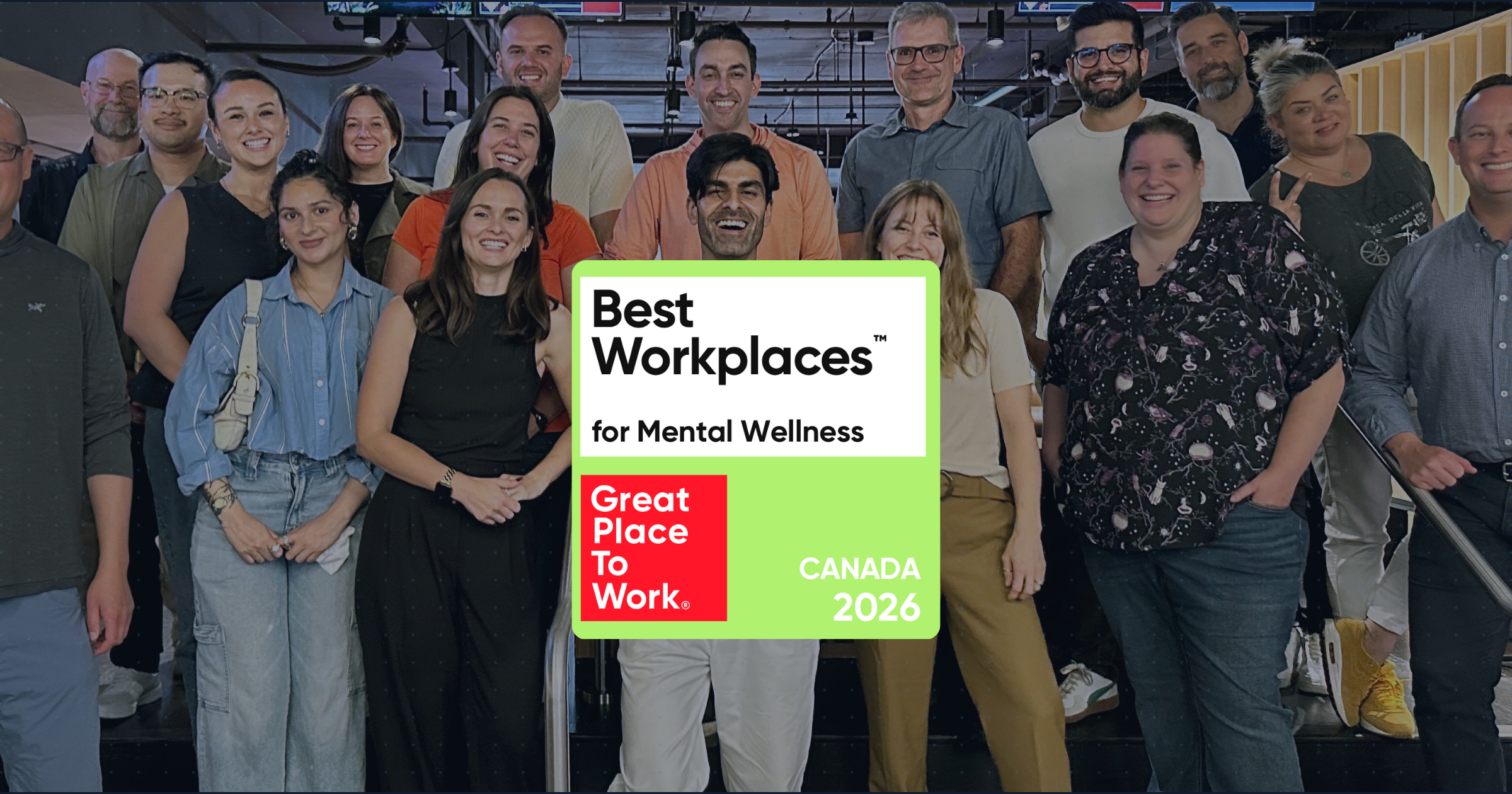
We’ve been certified as a Great Place to Work again — 93% of our team said Wagepoint is a great place to work. We also qualified for the Best Workplaces for Mental Wellness award. I’m proud of what that represents, but a badge isn’t the story. What matters is what sits behind it — a deliberate, ongoing investment in the people who build Wagepoint. That’s what we mean when we talk about culture.
A Canadian fintech culture built on people, not posters
Wagepoint is a Canadian fintech company, and our customers are Canadian small businesses — the restaurants, clinics, shops, agencies, and service providers who keep their teams paid every two weeks without drama. That work runs on trust, and trust runs on the people doing it. You can’t separate the product our customers use from the people who make it work. So when we talk about Canadian fintech culture, we’re not talking about fun perks or values on a wall. We’re talking about the unsung infrastructure and behaviours of a business that has to be right every single pay run.
Culture, done well, is one of the most practical things a company can invest in. It reinforces the brand our customers already see when they log in. It makes our people want to stay and do their best work. And it earns us the kind of external trust that a Great Place to Work certification can reflect — but can’t, on its own, create.
This is also the part of the work that genuinely lights me up. Employee experience is the actual product of culture, and engagement is what you see when the experience is right — someone owning a problem that wasn’t theirs to solve, a teammate stepping in without being asked, the person curious enough to push back on the way we’ve always done something. That’s a team showing up for each other and, by extension, for the customers depending on us. None of that happens by accident. We work for it, every day.
Where humans and AI actually work together
Our industry is in the middle of a real shift. AI isn’t something we’re watching from the sidelines; it’s changing how the work gets done. At Wagepoint, we’ve moved from being informally open to AI to actively investing in it, building the protocols, training, and the everyday expectations to make it part of how we work.
I’ll be honest about what that means. The work some of our teams do today will genuinely change. Many tasks that are manual right now will be automated, and more of our people will spend more of their time on analytical and judgement-based work. That’s a real change, and we don’t want to dismiss the experience and impact that can have on how it feels to be at work day to day.
There’s a shift everyone in our industry is watching — from AI replacing people, to people who use AI moving faster than people who don’t. Our job, as a company, is to make sure every Wagepointer has the runway, the support, and the training to be in that second group. Our best workplace for mental wellness accolades came because we create the psychological safety needed to learn, grow and embrace the things that make us human. That’s what it means to live our core value of staying both curious and kind, and it’s what it really means to invest in humans and technology, together.
The responsibility at the heart of Canadian fintech culture
This is the part I feel most strongly about. Companies like ours carry a real responsibility — first to our own teams, and through that work, to the broader Canadian workforce — to do our part in helping people build real AI skills.
Individuals, on their own, don’t have the time, access, or resources to stay ahead of something that’s moving this fast. That’s not a failing on their part; it’s just the reality of our ambitious agendas and full lives. If we wait for people to figure it out alone, we’ll end up with a workforce that’s been left behind by the very technology that was supposed to make work better. So we’re choosing to lead. We’re building AI skills into how we work, how we develop people, and the everyday experience of being on our team. Being trusted with something new, being given the space to try and fail and try again, being told plainly that you’re worth investing in: that’s where engagement actually lives.
And here’s where we’re going against the grain in all of this: while large parts of our industry are cutting roles in the name of AI, we’re continuing to grow our team, not shrink it. Our investment in AI is not about scaling back our workforce, but to give the team more capacity for more interesting, more strategic, more impactful work — for ourselves and for the customers depending on us.
What comes next
In the months ahead, we’ll have more to share on the AI-and-people story. That’s the part I’m most looking forward to: showing, not telling, how our team is actually using these tools to grow their careers and scale their impact.
For now, the short version is this: a great place to work in Canadian fintech isn’t a certification. It’s the daily decision to invest in the people who make the product real — and to meet the biggest shift in modern work by preparing our team for it, not sidelining them.
That’s the culture we’re building at Wagepoint. I hope it’s the one more of us choose to build.